

Written by Matt Salo
The dancer hit the jump. Legs extended, head thrown back, hair frozen mid-whip. The photographer fired a burst of six against a textured concrete wall in a studio in the West Loop, late afternoon, north-facing light coming through a bank of windows that had been closing all day. I was at the cart. The tether was live. I watched six frames land on my screen in maybe two seconds. Frame four was the one. The dancer landed, the photographer lowered the camera, and the room turned to look at the monitor.
Nothing about that moment had anything to do with me. Everything about it also did.
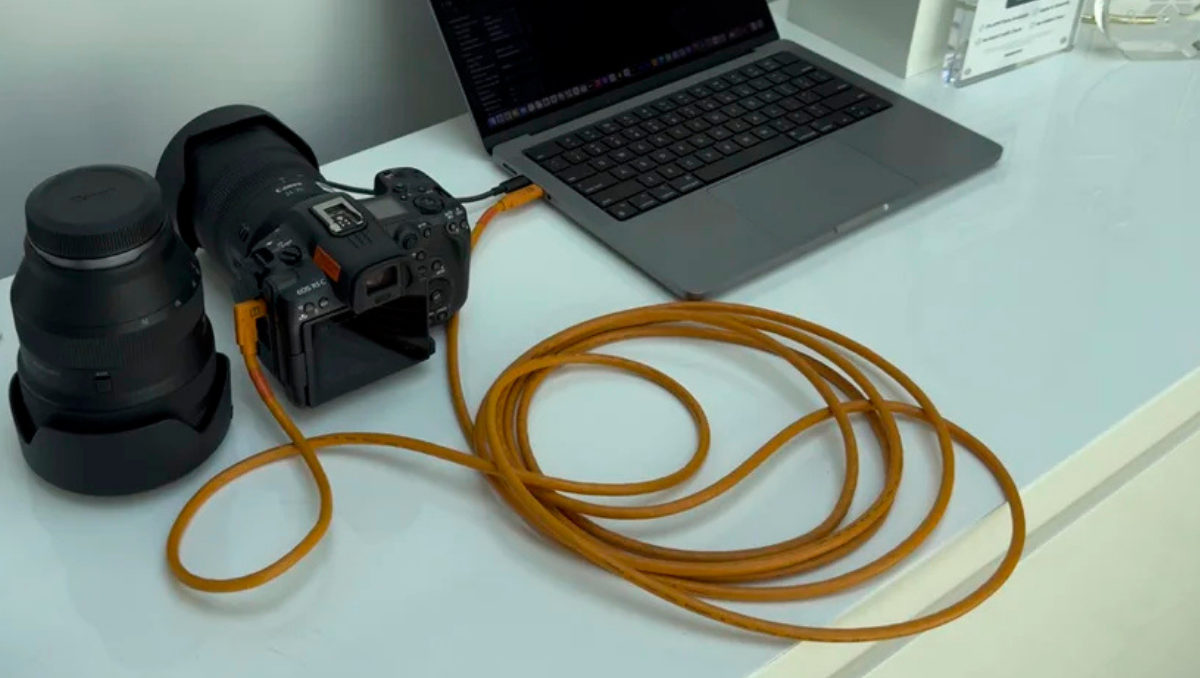
If the tether had been down right then, if I had been swapping a cable or restarting software or recovering from a card error, the frames still would have landed on the card. We would not have lost the images. But we would have lost the ability for the art director to see frame four on the monitor in real time and say “that’s it, we have it.” That connection during a shoot is what keeps the creative energy moving. Instead, the day keeps shooting that setup for another twenty minutes while I recover the tether and ingest the card. The light shifts. The energy that produced that jump dissipates. The moment is unreproducible. The technical infrastructure is what preserved it.”
That’s the job.
The Job Behind the Job
Everyone on set has one job. Yours is everything that happens between the shutter and the file.
If you have been doing this work for any length of time, you know the shape of the day already. The photographer gets the credit. The talent gets the lighting. The art director gets the brief. You get the silence. On a well-run shoot, nobody talks about you.
That is not a complaint. It is the win condition. When the day runs the way it is supposed to run, your work is the part that disappears, because the role is structured to disappear. A great tech day looks like a smooth day. The files arrive when they are supposed to. The colors look right. The drives do not fail. The client sees the right thing on the right screen at the right moment. The shoot looks effortless. The photographer looks like they had a great day.
This piece is for the people who already know that, and a quiet introduction for the people who would like to find out.
What We Are Doing While Nobody Notices
The cart is up by 8:30. By 9:00 you have the session built in Capture One, the folder tree named, Next Capture Naming set to match the session, and the monitor calibrated against the same target you used yesterday. You have run a test capture through the primary tether and through the backup. You have confirmed both backup drives are mounted, formatted correctly, and have plenty of headroom. You have your shortcuts mapped, your styles loaded, and your preview adjustments staged so that when the first real frame lands, it lands looking like a photograph and not like sensor data.
The photographer walks in. You hand them a working tether cable, a calibrated monitor, and a backup that is already running. Nobody had to ask.
Through the day you are doing maybe fifteen jobs at once, all of them small, all of them invisible if you do them well. Watching focus on the screen with the same attention the photographer is giving the camera. Catching a color shift one or two frames before anyone else sees it. Renaming a misfile in the background while the next setup loads. Swapping a tether cable that started throwing intermittent errors before it failed completely. Running a parallel backup to a second drive and confirming the match. Pulling a quick select for the client when they wander over with a question. Pushing a frame to the iPad the art director is holding without breaking eye contact with the screen.
All of this is the job.
The Energy Layer
The other thing the job description leaves out is that you are partly responsible for the energy in the room.
A photograph is a feeling. The light, the subject, the timing, the trust between the photographer and the talent. Every person on set is either feeding that feeling or pulling from it. The producer who keeps the schedule moving is feeding it. The assistant who builds the next setup before it is asked for is feeding it. The stylist who tucks the fabric without breaking the model’s eye line is feeding it. The digital tech who keeps the technical reality of the shoot from intruding on the creative reality is feeding it.
When the tether drops in the middle of a great moment, the moment goes with it. When the client sees a flat uncorrected RAW frame and starts asking questions that did not need to be asked, the questions take energy out of the room. When the photographer has to wait three minutes for a folder to finish copying because the wrong cable was used on the backup drive, the wait is not just a delay. It is a small leak in the trust the photographer is building with the talent and the client.
The tech is the person who keeps those leaks from opening. Most of the work is preventative. Most of it never has to be explained, because most of it never visibly happened.
The Preview Is a Decision, Not a Default
The single most under-leveraged surface in this job is the client-facing monitor.
If a client walks over and sees a flat, uncorrected RAW frame, they react to a flat, uncorrected RAW frame. Their instinct is to start adjusting. The talent feels watched. The art director gets quiet, then starts asking questions. The photographer has to defend choices that were never really choices, just defaults of the unprocessed file. Energy in the room drops, and the rest of the day gets harder.
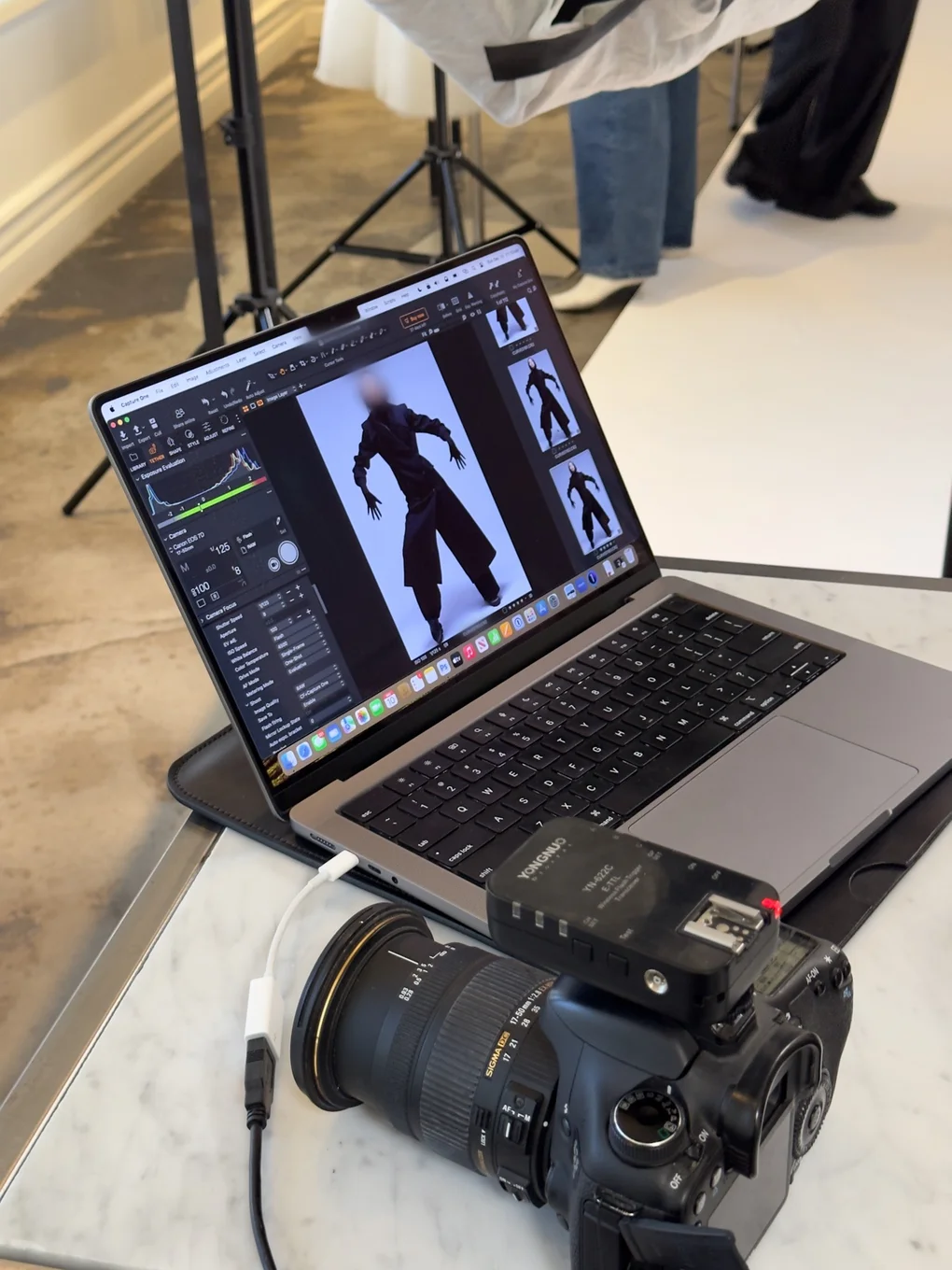
If they walk over and see a frame that looks like the finished photograph, even roughly, even temporarily, the room moves differently. The talent sees themselves looking good and exhales. The client trusts the photographer. The art director stops second-guessing and starts giving useful creative input. The shoot accelerates.
That does not happen by accident. It happens because the tech made a series of small, non-destructive decisions about how the file looks on the way to the monitor, without baking anything into the underlying RAW. Exposure, a working color grade, light skin work where appropriate. Nothing the photographer cannot override in post. But the version of the frame the room reacts to is the version you serve up, and that version is, in a real sense, the version the client buys.
The point here is that the monitor is not a passive surface. It is one of the most direct ways a tech contributes to the creative outcome of the day.
The Decision Engine at the Cart
A commercial shoot runs on a steady stream of small decisions. A surprising number of them happen at the tech station first.
A frame comes through soft. Is it focus, motion blur, or the preview not yet rendered at full resolution? You have ten seconds to figure that out before anyone notices and starts reacting. A color shift appears between setups. Is it white balance drift in mixed lighting, or a calibration issue on your monitor? Someone needs to know quickly, because the answer determines whether to keep shooting or stop and reset. A drive throws an error warning. Do you stop the production, swap it during the next setup change, or finish the look first and migrate everything to the spare during the lunch break?
You call those small ones, hundreds of times a day, without breaking the rhythm. Most of them never reach the photographer. The ones that do are framed so the photographer can decide in five seconds and keep moving. That filtering is half the job. The photographer’s attention is the most expensive resource on set, and protecting it is what a good tech does.
Underneath the decisions, there is an infrastructure most people never see. A color pipeline that starts at the camera profile and ends at the output recipe, with a calibrated monitor and a working preview style in between. A tether path that has been tested under load, with auto-reconnect so a momentary disconnect does not require a manual handshake. A backup architecture that writes in parallel to two drives during the day and verifies a third copy at wrap. A file structure that someone else could open six months from now and find the selects without calling you.
That is the surface area you are responsible for, all day, every shoot. When it works, nobody notices. When it does not, everyone notices the same thing at the same time. That asymmetry is the whole role.
Why “Most Important” Is Fair
The role is hard to credit because it is structured to disappear. You only notice the work when it is missing. That is also why nobody talks about us. Doing the job well makes the job invisible. The shoot looks effortless. The photographer looks like they had a great day. The way that day got built, the calibration, the tether routing, the file structure, the live preview, the backup redundancy, the small calls that kept the rhythm moving, lives at the cart and stays at the cart.
The digital tech is the role most photographers do not realize they need until they have one. It is the role clients do not notice until it is missing. It is the role that absorbs more of the day’s variance than the credit reflects, because so much of what makes a shoot feel professional, files moving correctly, color looking right, the client trusting what they see, the talent feeling good about what they see, runs through one person at one laptop.
You can run a shoot without a tech. People do, every day. The gap between a shoot with one and a shoot without one is bigger than people expect, and almost all of it shows up in the things nobody planned for.
That is the place the role lives. In the things nobody planned for.
What the Best Techs Have in Common
I have worked with people that I would consider to be some of the best in the business, and I have watched newer techs come up. The pattern that separates the people who get rebooked from the people who do not has very little to do with technical knowledge. Almost everyone learns the technical side eventually.
The pattern is presence. The best techs anticipate what the room needs before anyone has to ask. They are calm when something goes wrong, because something always does, and the photographer needs them to be the calmest person on set when the tether drops or a card throws an error. They know when to speak up and when to stay quiet. They make themselves useful in the gaps between setups, without abandoning their station. They treat the photographer’s reputation as their own reputation, because for the length of that booking, it is.
That dancer shoot ended on time. The art director got her frame. The photographer delivered the campaign. Nobody at the wrap mentioned the tether or the backup or the calibration or the preview. Nobody had to. Everything worked, so nothing had to be talked about.
That’s the job, and that’s a win.
Matt Salo is a digital technician and photographer based in Chicago, working tethered capture and color management on commercial photo productions. For a deeper look at everything covered here and more, including gear, pricing, finding the work, and building the business.

Check out his book Behind the Lens: A Working Guide to Digital Tech Services for Photographers, available on Amazon and Apple Books. More and contact at chicagodigitech.com.
