


As a photographer, you invest in the best tools available to help get the finest results. As you may already know, for equipment to last and work properly, special care is always needed. There is nothing worse than setting up for a photo shoot and discovering a piece of equipment was damaged in transport or not working properly. Your tethering cable is no different. A quality tethering cable is an investment and proper care and storage will help you get the most life out of it. Inside your USB, FireWire or Cat cable are sensitive wires and shielding designed for fast transmission speed and noise-reduction. Although fairly durable, if folded, bent or pinched you could experience communication errors. Here are 6 tips on how to properly care for your tethering cables.
Tip #1: Proper Coil
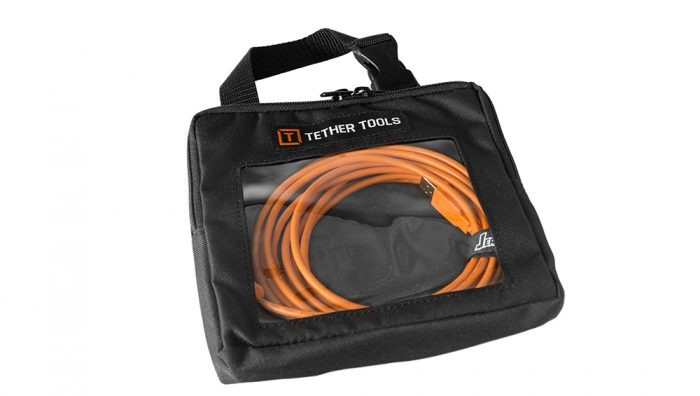
Throwing cables in a bag or just bundling them up in a case is a big ‘no-no’ in the tethering world. When storing your tethering cable always try to lightly roll your cables into a loose coil going with the natural curve of the wire. When not in use, try storing your tethering cable in a protective case where dust and impurities will not get lodged into the connector ends.
Tip #2: Store in case
“How do you store your cables?” – this is one of those common questions we hear on a regular basis. The best answer we can give is to always store cables away in a Cable Case. Depending if you need a Large Cable Case (holding 3 or more cables) or a Standard Cable Case (holding 1-2 cables), find the right bag or case for your cables keeping them safe when packed away.
Tip #3: Don’t step on it
Because cables are made of of tiny little fibers, any impact or stress that is put on a cable can cause the fibers inside to slowly breakdown. So this tip is plain and simple – try to NOT step on the cable while in the studio. If there are people walking around in the studio where this is hard to avoid, try looking at using Gaffer Tape to secure the cable to the floor making it much more apparent so people avoid stepping on the cable.
Tip #4: Don’t roll over it
Same rules apply here. Again, the fibers in tethering cables will slowly breakdown if not properly cared for. As you can see in the photo above with the TetherPro High-Visibility Orange Tethering Cable, the padding around the cable is thick, but the insulation inside will help protect the cable fibers.
Tip #5: Prevent Jerking
For years, Tether Tools’ JerkStopper Camera Support was a staple in photographers’ kits. It earned that place by solving a universal problem: damage caused to camera ports and tether cables from accidental pulling or jerking on the cable.
Today, those same benefits have been enhanced and engineered into a more advanced solution in TetherGuard Camera Support.
TetherGuard was designed to protect and relieve stress on camera ports and cables. By anchoring the cable at the camera, TetherGuard prevents sudden pulls, minimizes strain on delicate USB-C ports, and keeps your tethered connection stable and reliable throughout your shoot.
Camera support systems like TetherGuard securely lock cables in place, and offer an optional breakaway configuration that releases only when excessive pressure is applied, helping prevent damage to your camera or cable.
Whether you’re shooting in a busy studio or on location, TetherGuard delivers peace of mind and professional-grade cable management—ensuring you never miss a shot while safeguarding your most valuable equipment.
Tip #6: Give it some sun
Laying your cables out in the sun for an hour or two will relax your cable, allow it to be retrained and rolled smoothly.
Tip #7 Secure Your Cable and Weatherize Tethered Connections
When your camera is mounted on a tripod or stand, cable management needs to be part of the plan. As your tethering cable runs down the tripod and toward your workstation, securing it properly helps reduce strain on ports, prevents trips or snags, and keeps your workflow clean and professional.
ProTab Cable Ties provide a simple, durable way to secure your tethering cable along tripod legs, keeping it routed neatly toward the floor and up a stand or cart where your laptop is positioned. Clean cable routing minimizes movement, reduces wear over time, and helps maintain a reliable connection throughout your shoot.
For longer cable runs, photographers often add an extension cable. In these setups, the first consideration is locking the connection between your tethering cable and extension cable. For this, Tether Tools offers the TetherPro Optima 10G TetherBoost Locking Extension Cable, designed to maintain a secure, high-performance connection over extended distances.
In dusty, damp, or unpredictable environments, adding the Cord Protect Weatherizer provides an extra layer of protection for cable connection points and helping prevent disconnects while shielding sensitive cable ends from moisture and debris.
Learn more about cable management solutions for photography and videography workflows.
